Buy n4c.eu ?
We are moving the project
n4c.eu .
Are you interested in purchasing the domain
n4c.eu ?
domain@kv-gmbh.de · 0541-91531010
Buy n4c.eu ?
What is the efficiency of a pulley system?
The efficiency of a pulley system is determined by the ratio of the output force to the input force. In an ideal pulley system with no friction, the efficiency is 100% because the output force is equal to the input force. However, in real-world applications, some energy is lost to friction and other factors, so the efficiency is typically less than 100%. The efficiency can be improved by using pulleys with low friction bearings and by properly maintaining the system. **
Can someone explain the efficiency of a pulley system to me?
A pulley system is a simple machine that consists of a wheel with a groove around its circumference and a rope or belt that runs along the groove. The efficiency of a pulley system is determined by the mechanical advantage it provides, which is the ratio of the output force to the input force. By using multiple pulleys in a system, the force required to lift an object can be reduced, making the task easier. This is because the pulleys distribute the load and allow the force to be applied over a longer distance, resulting in less effort needed to lift the object. Overall, the efficiency of a pulley system allows for the amplification of force and the reduction of effort required to perform tasks such as lifting heavy objects. **


Similar search terms for AISIN-PDARE-710-Crankshaft-pulley
Top-Angebote
Products related to AISIN-PDARE-710-Crankshaft-pulley:
-
AISIN PDAFC-703 Crankshaft pulleyNumber of grooves: 5; Inner Diameter [mm]: 35; Outer Diameter [mm]: 160; Construction Year to: 12/2012, 12/2011, 08/2014, 05/2006, 07/2006, 04/2008, 12/2009, 01/2012, 01/2011, 06/2010, 12/2010, 08/2010, 09/2010, 09/2006, 10/2011, 10/2020; Vehicle type: Panda, Panda Classic, Doblo Cargo, Pratico, Aveo, Sonic, Grande Punto, Astra, Astra Sport Hatch; Construction Year from: 01/2012, 03/2012, 06/2006, 12/2003, 07/2011, 09/2008, 09/2009, 11/2009, 03/2007, 04/2007, 09/2011, 03/2015, 01/2013, 05/2015, 07/2016; for OE number: 55200498; Vehicle Equipment: for vehicles with electric power steering; Emissions Standard: Euro 5, Euro 5/Euro 6; TecDoc Engine Number: 18989; for model code: Egea, Tipo37,99 £*Shipping: 8,45 £Secure redirect to the provider
-
AISIN PDAMB-700 Crankshaft pulleyNumber of grooves: 5; Inner Diameter [mm]: 32; Outer Diameter [mm]: 192; Transmission Type: Manual Transmission; Construction Year to: 10/2000, 12/2004, 07/2003, 03/2003, 07/2006, 07/2005, 01/2008, 12/2011, 12/2008, 08/2014, 12/2012; Construction Year from: 06/2003, 07/2003, 05/2005, 03/2006, 11/2007, 04/2007, 01/2010; Engine Number from: 30085732, 40006509; Vehicle type: Sprinter 515D, Sprinter 415D, Sprinter 411D58,99 £*Shipping: 8,45 £Secure redirect to the provider
-
AISIN PDABM-700 Crankshaft pulleyNumber of grooves: 3; Parameter: 4PK + 6PK; Outer Diameter [mm]: 192; Inner Diameter [mm]: 10; Construction Year from: 06/2003, 09/2004, 06/2005, 08/2006, 09/2006, 06/2006, 06/2004, 09/2007, 07/2007, 11/2005, 07/2003; Construction Year to: 02/2007, 08/2008, 09/2005, 09/2007, 08/2010, 02/2010, 03/2010, 12/2009, 07/2006; Vehicle type: X3, X6 xDrive 30d, X6 xDrive 35d, 525d xDrive, 530d xDrive; TecDoc Engine Number: 27267183,99 £*Shipping: 1,99 £Secure redirect to the provider


-
What is the difference between a kickstart crankshaft and an electric start crankshaft?
A kickstart crankshaft is designed to be manually started by using a kick lever, requiring physical effort from the rider to start the engine. On the other hand, an electric start crankshaft is equipped with an electric starter motor that allows the rider to start the engine with the push of a button, without the need for physical exertion. Electric start crankshafts are typically found on more modern motorcycles, offering convenience and ease of use compared to kickstart crankshafts. **
-
How can the efficiency of a pulley system be determined in physics?
The efficiency of a pulley system in physics can be determined by comparing the work input to the work output. The work input is the force applied to the pulley system multiplied by the distance over which the force is applied. The work output is the force exerted by the pulley system multiplied by the distance over which the force is exerted. By comparing these two values, the efficiency of the pulley system can be calculated using the formula: Efficiency = (Work output / Work input) * 100%. This calculation provides a measure of how effectively the pulley system is able to transfer input work into output work. **
-
How does the crankshaft slide horizontally?
The crankshaft slides horizontally through the use of bearings and lubrication. The bearings are placed at specific points along the crankshaft to reduce friction and allow for smooth horizontal movement. Additionally, lubrication is applied to the bearings to further reduce friction and ensure the crankshaft can slide easily. This horizontal movement is essential for the crankshaft to transfer the up-and-down motion of the pistons into rotational motion. **
-
"Can the original crankshaft handle it?"
The original crankshaft may or may not be able to handle it, depending on the specific circumstances. Factors such as the engine's power output, the type of modifications being made, and the condition of the original crankshaft will all play a role in determining whether it can handle the changes. It's important to consult with a knowledgeable mechanic or engineer to assess the crankshaft's capabilities and determine if any upgrades or replacements are necessary. **

How can the crankshaft be filed?
The crankshaft can be filed by using a precision file to remove any burrs, nicks, or imperfections on the surface. It is important to use a file that is specifically designed for metalworking and to work carefully and methodically to avoid damaging the crankshaft. The filing process should be done with the crankshaft securely held in place to prevent any movement or flexing. After filing, the crankshaft should be thoroughly cleaned and inspected to ensure that the filing has achieved the desired result. **
What is 14 out of 710?
14 out of 710 is a fraction that represents a part of a whole. To find the decimal equivalent, you would divide 14 by 710, which equals approximately 0.0197. This means that 14 out of 710 is about 1.97% of the total. **
Top-Angebote
Products related to AISIN-PDARE-710-Crankshaft-pulley:
-
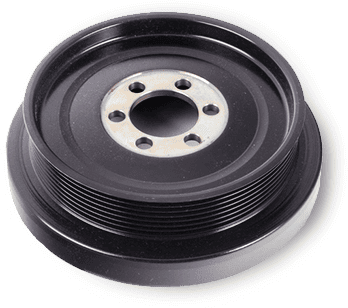
AISIN PDARE-710 Crankshaft pulleyNumber of grooves: 5; Inner Diameter [mm]: 15; Outer Diameter [mm]: 136; TecDoc Engine Number: 4872, 4874; Engine Code: G8T 792; Construction Year to: 11/1999, 10/1999, 04/2000, 09/1999; Construction Year from: 11/1996; Vehicle type: Grand Espace, Espace35,49 £*Shipping: 8,45 £Secure redirect to the provider
-
AISIN PDARE-703 Crankshaft pulleyNumber of grooves: 5; Inner Diameter [mm]: 26; Outer Diameter [mm]: 130; Construction Year to: 12/2006, 12/2012, 05/2005, 03/2009, 06/2008, 10/2005, 08/2008, 04/2005; Vehicle type: Thalia, Clio Symbol, Clio Thalia; Construction Year from: 07/1998, 10/1999, 04/2002; TecDoc Engine Number: 16349, 1331030,99 £*Shipping: 8,45 £Secure redirect to the provider
-
AISIN PDAFC-703 Crankshaft pulleyNumber of grooves: 5; Inner Diameter [mm]: 35; Outer Diameter [mm]: 160; Construction Year to: 12/2012, 12/2011, 08/2014, 05/2006, 07/2006, 04/2008, 12/2009, 01/2012, 01/2011, 06/2010, 12/2010, 08/2010, 09/2010, 09/2006, 10/2011, 10/2020; Vehicle type: Panda, Panda Classic, Doblo Cargo, Pratico, Aveo, Sonic, Grande Punto, Astra, Astra Sport Hatch; Construction Year from: 01/2012, 03/2012, 06/2006, 12/2003, 07/2011, 09/2008, 09/2009, 11/2009, 03/2007, 04/2007, 09/2011, 03/2015, 01/2013, 05/2015, 07/2016; for OE number: 55200498; Vehicle Equipment: for vehicles with electric power steering; Emissions Standard: Euro 5, Euro 5/Euro 6; TecDoc Engine Number: 18989; for model code: Egea, Tipo37,99 £*Shipping: 8,45 £Secure redirect to the provider
-
What is the efficiency of a pulley system?
The efficiency of a pulley system is determined by the ratio of the output force to the input force. In an ideal pulley system with no friction, the efficiency is 100% because the output force is equal to the input force. However, in real-world applications, some energy is lost to friction and other factors, so the efficiency is typically less than 100%. The efficiency can be improved by using pulleys with low friction bearings and by properly maintaining the system. **
-
Can someone explain the efficiency of a pulley system to me?
A pulley system is a simple machine that consists of a wheel with a groove around its circumference and a rope or belt that runs along the groove. The efficiency of a pulley system is determined by the mechanical advantage it provides, which is the ratio of the output force to the input force. By using multiple pulleys in a system, the force required to lift an object can be reduced, making the task easier. This is because the pulleys distribute the load and allow the force to be applied over a longer distance, resulting in less effort needed to lift the object. Overall, the efficiency of a pulley system allows for the amplification of force and the reduction of effort required to perform tasks such as lifting heavy objects. **
-
What is the difference between a kickstart crankshaft and an electric start crankshaft?
A kickstart crankshaft is designed to be manually started by using a kick lever, requiring physical effort from the rider to start the engine. On the other hand, an electric start crankshaft is equipped with an electric starter motor that allows the rider to start the engine with the push of a button, without the need for physical exertion. Electric start crankshafts are typically found on more modern motorcycles, offering convenience and ease of use compared to kickstart crankshafts. **
-
How can the efficiency of a pulley system be determined in physics?
The efficiency of a pulley system in physics can be determined by comparing the work input to the work output. The work input is the force applied to the pulley system multiplied by the distance over which the force is applied. The work output is the force exerted by the pulley system multiplied by the distance over which the force is exerted. By comparing these two values, the efficiency of the pulley system can be calculated using the formula: Efficiency = (Work output / Work input) * 100%. This calculation provides a measure of how effectively the pulley system is able to transfer input work into output work. **
Similar search terms for AISIN-PDARE-710-Crankshaft-pulley
-
AISIN PDAMB-700 Crankshaft pulleyNumber of grooves: 5; Inner Diameter [mm]: 32; Outer Diameter [mm]: 192; Transmission Type: Manual Transmission; Construction Year to: 10/2000, 12/2004, 07/2003, 03/2003, 07/2006, 07/2005, 01/2008, 12/2011, 12/2008, 08/2014, 12/2012; Construction Year from: 06/2003, 07/2003, 05/2005, 03/2006, 11/2007, 04/2007, 01/2010; Engine Number from: 30085732, 40006509; Vehicle type: Sprinter 515D, Sprinter 415D, Sprinter 411D58,99 £*Shipping: 8,45 £Secure redirect to the provider
-
AISIN PDABM-700 Crankshaft pulleyNumber of grooves: 3; Parameter: 4PK + 6PK; Outer Diameter [mm]: 192; Inner Diameter [mm]: 10; Construction Year from: 06/2003, 09/2004, 06/2005, 08/2006, 09/2006, 06/2006, 06/2004, 09/2007, 07/2007, 11/2005, 07/2003; Construction Year to: 02/2007, 08/2008, 09/2005, 09/2007, 08/2010, 02/2010, 03/2010, 12/2009, 07/2006; Vehicle type: X3, X6 xDrive 30d, X6 xDrive 35d, 525d xDrive, 530d xDrive; TecDoc Engine Number: 27267183,99 £*Shipping: 1,99 £Secure redirect to the provider
-
AISIN PDAFC-702 Crankshaft pulleyNumber of grooves: 5; Inner Diameter [mm]: 30; Outer Diameter [mm]: 158; Construction Year to: 03/2010, 02/2007, 05/2008, 08/2005, 03/2007, 05/2006, 08/2007, 07/2006, 06/2007, 02/2006, 10/2003, 09/2011, 12/2009; Vehicle Equipment: for vehicles with air conditioning; Engine Code: DW8B, DW8, WJY; Vehicle Identification Number (VIN) from: 1089778, 1189377; Construction Year from: 07/2002, 09/2004, 12/2002, 12/2004, 06/2002, 09/2006, 12/2003, 02/2002, 11/2002, 11/2004, 08/2002, 09/2000; for RPO number from: 09366, 10178, 09521, 10248, 09361, 10898, 9521, 10180, 09520, 09217, 09487, 09338, 10249, 09519; Vehicle type: Berlingo MultiSpace, Dispatch, Jumpy, Berlingo, Partner, Ranch; Emissions Standard: Euro 3, Euro 2; not for vehicle type: Berlingo VU/VP (M59), Partner VU/VP (M59); TecDoc Engine Number: 15310, 10708, 21039; Transmission Type: Automatic Transmission, Manual Transmission; Vehicle Equipment Line/Trim Level: 2005, Partner VU/VP (M59); Catalytic Converter Type: for vehicles with soot particulate filter40,99 £*Shipping: 8,45 £Secure redirect to the provider
-
How does the crankshaft slide horizontally?
The crankshaft slides horizontally through the use of bearings and lubrication. The bearings are placed at specific points along the crankshaft to reduce friction and allow for smooth horizontal movement. Additionally, lubrication is applied to the bearings to further reduce friction and ensure the crankshaft can slide easily. This horizontal movement is essential for the crankshaft to transfer the up-and-down motion of the pistons into rotational motion. **
-
"Can the original crankshaft handle it?"
The original crankshaft may or may not be able to handle it, depending on the specific circumstances. Factors such as the engine's power output, the type of modifications being made, and the condition of the original crankshaft will all play a role in determining whether it can handle the changes. It's important to consult with a knowledgeable mechanic or engineer to assess the crankshaft's capabilities and determine if any upgrades or replacements are necessary. **
-
How can the crankshaft be filed?
The crankshaft can be filed by using a precision file to remove any burrs, nicks, or imperfections on the surface. It is important to use a file that is specifically designed for metalworking and to work carefully and methodically to avoid damaging the crankshaft. The filing process should be done with the crankshaft securely held in place to prevent any movement or flexing. After filing, the crankshaft should be thoroughly cleaned and inspected to ensure that the filing has achieved the desired result. **
-
What is 14 out of 710?
14 out of 710 is a fraction that represents a part of a whole. To find the decimal equivalent, you would divide 14 by 710, which equals approximately 0.0197. This means that 14 out of 710 is about 1.97% of the total. **
* All prices are inclusive of VAT and, if applicable, plus shipping costs. The offer information is based on the details provided by the respective shop and is updated through automated processes. Real-time updates do not occur, so deviations can occur in individual cases. ** Note: Parts of this content were created by AI.