Buy n4c.eu ?
We are moving the project
n4c.eu .
Are you interested in purchasing the domain
n4c.eu ?
domain@kv-gmbh.de · 0541-91531010
Buy n4c.eu ?
What did Giacomo Casanova do to get women?
Giacomo Casanova was known for his charm, wit, and intelligence, which he used to captivate and seduce women. He was a skilled conversationalist and had a talent for making women feel special and desired. Casanova also had a reputation for being a great listener and being attentive to a woman's needs and desires. Additionally, he was known for his confidence and boldness, which added to his allure and made him irresistible to many women. **
How can a pergola be planted?
A pergola can be planted by incorporating climbing plants such as wisteria, grapevines, or climbing roses at the base of the structure. These plants can be trained to grow up and around the pergola, creating a beautiful natural canopy. It's important to choose plants that are suitable for the climate and will thrive in the specific conditions of the pergola's location. Regular pruning and maintenance will also be necessary to ensure the plants grow in the desired manner and do not overwhelm the structure. **


Similar search terms for Baraldo-Giacomo-Il-Pergola
Top-Angebote
Products related to Baraldo-Giacomo-Il-Pergola:
-
Fenocchio Giacomo Nebbiolo Giacomo Fenocchio 2024The Langhe Nebbiolo from the family-run winery Giacomo Fenocchio represents a fresh and balanced interpretation of the noble grape variety Nebbiolo. The origins of the historic winery Giacomo Fenocchio date back to 1864, and since then, different generations of the Fenocchio family have passed down their knowledge of the craft and the territory. Today, at the helm of the estate is Claudio Fenocchio, a true winemaker who personally oversees every aspect of production, from the vineyard to vinification, strictly in line with tradition. Giacomo Fenocchio Langhe Nebbiolo comes from only grapes of the same-named black variety grown sustainably at an altitude of about 300 meters above sea level. The vines, averaging 15 years of age, extend over a hilly area facing east and characterized by soils dating back to the Elveziano, composed of clay sediments, blue marls, and tuff. The harvest takes place in mid-October, and the grapes are then pressed in stainless steel tanks where alcoholic fermentation occurs spontaneously in contact with the skins for about 10 days. The subsequent maturation phase takes place for 6 months always in steel and for another 6 months in large Slavonian oak barrels. This is followed by bottling and an additional resting in glass before the final market release. The Langhe Nebbiolo by Giacomo Fenocchio has a bright ruby red color with subtle garnet reflections. Intense and inviting aromatic profile with notes of plum, cherry, and rose petals that blend with pleasant hints of licorice. On the palate, it is full and balanced, with a good body and harmony, featuring a pleasant tannic structure that anticipates the finish consistent with the sensations perceived on the nose.19,00 £*Shipping: 48,00 £Secure redirect to the provider
-
Brezza Giacomo Nebbiolo Giacomo Brezza 2024A truly original and compelling Nebbiolo, aged only in stainless steel, with great drinkability and freshness. A wine that brings out the beautiful typical of the grape, without any aging in wood and, for this reason, lighter and more drinkable than many Nebbiolo of the area. A great table wine, perfect to pair with pasta dishes of the Italian tradition. The cellar Brezza is an absolute guarantee of quality and produces some of the most popular and award-winning Barolo. It is a traditional reality and, at the same time, dynamic, capable of giving an extraordinary quality without sacrificing innovation. To confirm this, simply open the elegant glass stopper that Brezza has chosen for this Nebbiolo won an experiment in place for a really delicious wine.17,00 £*Shipping: 48,00 £Secure redirect to the provider
-
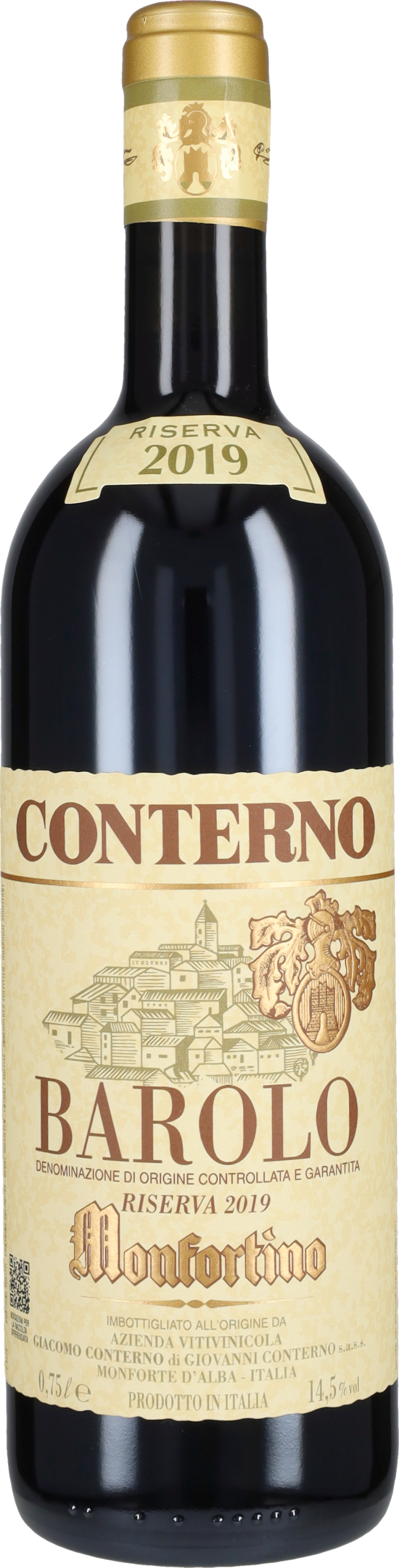
Conterno Giacomo Monfortino Riserva Giacomo Conterno 2019Monfortino is unabashedly a true liquid legend, an absolute outlier capable of rewriting the history of Barolo and sitting at the table of the world's greatest wines. A granite monument, it is an almost immortal creature given its ability to defy time and establish a dialectical relationship in which it even emerges enriched after decades. A piece of Langa, deep and territorial, as is the winery founded by the Conterno family in 1900 without ever failing, from that day forward, the classic and austere interpretation of a vocated vine such as Nebbiolo. The first Monfortino label appeared in 1924 to emphasize the location of the vineyards located in Monforte d'Alba, while since 1974, the wine has been made entirely from the Vigna Francia of Serralunga D'Alba. Monfortino Riserva comes from a selection of the best Nebbiolo grapes located in the Francia vineyard, the same vineyard from which Barolo and Barbera Cascina Francia, other historic Conterno wines, are derived. After meticulous sorting of the clusters, the first fermentation takes place in 61-hectoliter oak vats, with long macerations, including submerged cap macerations, as per tradition. Then the liquid is moved to large wooden barrels, mainly of Austrian origin, where after malolactic fermentation, it refines for about six years before bottling. Barolo Monfortino Riserva presents itself in the glass with a bright, iridescent garnet red colour. The nose is a poignant portrait of Langa, which is gradually and whisperingly revealed. Dog rose, violet, cherry: there is everything in this hymn to classicism, although to speak of descriptors is almost reductive given the harmony and cohesion of the aromas. The taste is experiential, a veritable cyclone that conquers the palate filling it with grace and power at the same time. The displacement of the liquid allows it to go very far while fading into an eternal persistence. A must-drink at least once in a lifetime.854,00 £*Shipping: 48,00 £Secure redirect to the provider


-
When do you use il faut and il ne faut pas?
"Il faut" is used to express what is necessary or required, while "il ne faut pas" is used to express what is not allowed or should be avoided. For example, you would use "il faut" to say "il faut étudier pour réussir" (it is necessary to study to succeed), and "il ne faut pas" to say "il ne faut pas fumer dans ce lieu" (smoking is not allowed in this place). These expressions are used to give advice, make recommendations, or set rules. **
-
What is the difference between il faut que and il faut?
"Il faut" is used to express a general necessity or obligation, while "il faut que" is used to introduce a specific action or event that is necessary or required. For example, "il faut manger" means "it is necessary to eat" in a general sense, while "il faut que tu manges" means "you need to eat" in a specific sense. "Il faut" is used to make a general statement about what is necessary, while "il faut que" is used to specify what needs to be done. **
-
Why is it souhaite-t-il and not souhaite-s-il?
In French, the pronoun "il" (he) is combined with the verb "souhaiter" (to wish) to form the phrase "souhaite-t-il" because of the rule of verb inversion in interrogative sentences. When forming a question in French, the subject pronoun and the verb are inverted, so "souhaite-t-il" follows this rule. The "t" is added to create a liaison between the verb and the pronoun, making the pronunciation smoother. **
-
How do I attach a pergola to the balcony?
To attach a pergola to a balcony, you will need to use brackets or anchors that are specifically designed for this purpose. Make sure the brackets are securely attached to the balcony railing or wall using screws or bolts. It is important to ensure that the structure is stable and can withstand the weight of the pergola. Additionally, consider consulting a professional or following manufacturer's instructions for proper installation to ensure safety and stability. **
How do I create a roof for a pergola?
To create a roof for a pergola, you can use materials such as polycarbonate panels, fabric, or wood. One option is to install beams across the top of the pergola and then attach the roofing material to the beams. Another option is to use a retractable canopy that can be pulled over the top of the pergola when needed. Make sure to consider the weight of the roofing material and ensure it is securely attached to the pergola structure to withstand weather conditions. **
What comes after il faudrait in French?
In French, "il faudrait" is followed by the infinitive form of a verb. This construction is used to express a suggestion or a polite request. For example, "il faudrait partir tôt" means "it would be necessary to leave early." **
Top-Angebote
Products related to Baraldo-Giacomo-Il-Pergola:
-
Braida - Giacomo Bologna Il Bacialè Braida 2020The “Bacialè” from the Braida winery represents the harmony of the union of different grape varieties, each capable of contributing its own unique and unrepeatable personality. The name “Bacialè”, in fact, in the Piedmont dialect of Asti indicates the matchmaker, that is, one who combines marriages. The Bologna family, owners of the Braida winery, has actually been the true matchmaker of this red, pairing Barbera with other red grape varieties that can perfectly integrate with each other. The result is a wine of juice and finesse. The winery is located in Rocchetta Tanaro, in the province of Asti, and is currently led by the third generation. Since 1961, the roots of the Bologna family have run deep in the Piedmontese land, or rather, in the Monferrato vineyard. So in love with this territory, the Bologna family tirelessly dedicates itself to work in the field, carried out with great environmental respect, and firmly supports the enhancement of the local grape variety, Barbera. Braida makes this variety a queen of the territory, paying homage to it through its different expressions. The red wine Bacialè is composed of 60% Barbera, with variable percentages of Pinot Nero, Cabernet Sauvignon, Merlot, and, for the first time in the 2016 vintage, Cabernet Franc. The grapes used come from vineyards located in two different areas: Rocchetta Tanaro and Castelnuovo Calcea. The first is situated at an altitude of 160 meters above sea level and features medium-textured soils, while the second is characterized by a predominance of calcareous sands and is located at a higher altitude, about 230 meters above sea level. Once harvested and pressed, the different grape varieties are vinified separately. After alcoholic fermentation and then malolactic fermentation, the different batches begin aging, part in wooden vats and part in oak barrels for about 12 months. Once the various parts are blended, a bottle aging of 4 months is carried out.beautiful brightness. The aroma plays on mainly fruity and spicy nuances, emerging with notes of blackberry, plum, pepper, and cinnamon. On the palate, the body is full and balanced, with good softness and freshness. “Bracialè” carries elegance and liveliness, as only the best expressions of Barbera can do.22,00 £*Shipping: 48,00 £Secure redirect to the provider
-
Fenocchio Giacomo Nebbiolo Giacomo Fenocchio 2024The Langhe Nebbiolo from the family-run winery Giacomo Fenocchio represents a fresh and balanced interpretation of the noble grape variety Nebbiolo. The origins of the historic winery Giacomo Fenocchio date back to 1864, and since then, different generations of the Fenocchio family have passed down their knowledge of the craft and the territory. Today, at the helm of the estate is Claudio Fenocchio, a true winemaker who personally oversees every aspect of production, from the vineyard to vinification, strictly in line with tradition. Giacomo Fenocchio Langhe Nebbiolo comes from only grapes of the same-named black variety grown sustainably at an altitude of about 300 meters above sea level. The vines, averaging 15 years of age, extend over a hilly area facing east and characterized by soils dating back to the Elveziano, composed of clay sediments, blue marls, and tuff. The harvest takes place in mid-October, and the grapes are then pressed in stainless steel tanks where alcoholic fermentation occurs spontaneously in contact with the skins for about 10 days. The subsequent maturation phase takes place for 6 months always in steel and for another 6 months in large Slavonian oak barrels. This is followed by bottling and an additional resting in glass before the final market release. The Langhe Nebbiolo by Giacomo Fenocchio has a bright ruby red color with subtle garnet reflections. Intense and inviting aromatic profile with notes of plum, cherry, and rose petals that blend with pleasant hints of licorice. On the palate, it is full and balanced, with a good body and harmony, featuring a pleasant tannic structure that anticipates the finish consistent with the sensations perceived on the nose.19,00 £*Shipping: 48,00 £Secure redirect to the provider
-
Brezza Giacomo Nebbiolo Giacomo Brezza 2024A truly original and compelling Nebbiolo, aged only in stainless steel, with great drinkability and freshness. A wine that brings out the beautiful typical of the grape, without any aging in wood and, for this reason, lighter and more drinkable than many Nebbiolo of the area. A great table wine, perfect to pair with pasta dishes of the Italian tradition. The cellar Brezza is an absolute guarantee of quality and produces some of the most popular and award-winning Barolo. It is a traditional reality and, at the same time, dynamic, capable of giving an extraordinary quality without sacrificing innovation. To confirm this, simply open the elegant glass stopper that Brezza has chosen for this Nebbiolo won an experiment in place for a really delicious wine.17,00 £*Shipping: 48,00 £Secure redirect to the provider
-
What did Giacomo Casanova do to get women?
Giacomo Casanova was known for his charm, wit, and intelligence, which he used to captivate and seduce women. He was a skilled conversationalist and had a talent for making women feel special and desired. Casanova also had a reputation for being a great listener and being attentive to a woman's needs and desires. Additionally, he was known for his confidence and boldness, which added to his allure and made him irresistible to many women. **
-
How can a pergola be planted?
A pergola can be planted by incorporating climbing plants such as wisteria, grapevines, or climbing roses at the base of the structure. These plants can be trained to grow up and around the pergola, creating a beautiful natural canopy. It's important to choose plants that are suitable for the climate and will thrive in the specific conditions of the pergola's location. Regular pruning and maintenance will also be necessary to ensure the plants grow in the desired manner and do not overwhelm the structure. **
-
When do you use il faut and il ne faut pas?
"Il faut" is used to express what is necessary or required, while "il ne faut pas" is used to express what is not allowed or should be avoided. For example, you would use "il faut" to say "il faut étudier pour réussir" (it is necessary to study to succeed), and "il ne faut pas" to say "il ne faut pas fumer dans ce lieu" (smoking is not allowed in this place). These expressions are used to give advice, make recommendations, or set rules. **
-
What is the difference between il faut que and il faut?
"Il faut" is used to express a general necessity or obligation, while "il faut que" is used to introduce a specific action or event that is necessary or required. For example, "il faut manger" means "it is necessary to eat" in a general sense, while "il faut que tu manges" means "you need to eat" in a specific sense. "Il faut" is used to make a general statement about what is necessary, while "il faut que" is used to specify what needs to be done. **
Similar search terms for Baraldo-Giacomo-Il-Pergola
-
Conterno Giacomo Monfortino Riserva Giacomo Conterno 2019Monfortino is unabashedly a true liquid legend, an absolute outlier capable of rewriting the history of Barolo and sitting at the table of the world's greatest wines. A granite monument, it is an almost immortal creature given its ability to defy time and establish a dialectical relationship in which it even emerges enriched after decades. A piece of Langa, deep and territorial, as is the winery founded by the Conterno family in 1900 without ever failing, from that day forward, the classic and austere interpretation of a vocated vine such as Nebbiolo. The first Monfortino label appeared in 1924 to emphasize the location of the vineyards located in Monforte d'Alba, while since 1974, the wine has been made entirely from the Vigna Francia of Serralunga D'Alba. Monfortino Riserva comes from a selection of the best Nebbiolo grapes located in the Francia vineyard, the same vineyard from which Barolo and Barbera Cascina Francia, other historic Conterno wines, are derived. After meticulous sorting of the clusters, the first fermentation takes place in 61-hectoliter oak vats, with long macerations, including submerged cap macerations, as per tradition. Then the liquid is moved to large wooden barrels, mainly of Austrian origin, where after malolactic fermentation, it refines for about six years before bottling. Barolo Monfortino Riserva presents itself in the glass with a bright, iridescent garnet red colour. The nose is a poignant portrait of Langa, which is gradually and whisperingly revealed. Dog rose, violet, cherry: there is everything in this hymn to classicism, although to speak of descriptors is almost reductive given the harmony and cohesion of the aromas. The taste is experiential, a veritable cyclone that conquers the palate filling it with grace and power at the same time. The displacement of the liquid allows it to go very far while fading into an eternal persistence. A must-drink at least once in a lifetime.854,00 £*Shipping: 48,00 £Secure redirect to the provider
-
Why is it souhaite-t-il and not souhaite-s-il?
In French, the pronoun "il" (he) is combined with the verb "souhaiter" (to wish) to form the phrase "souhaite-t-il" because of the rule of verb inversion in interrogative sentences. When forming a question in French, the subject pronoun and the verb are inverted, so "souhaite-t-il" follows this rule. The "t" is added to create a liaison between the verb and the pronoun, making the pronunciation smoother. **
-
How do I attach a pergola to the balcony?
To attach a pergola to a balcony, you will need to use brackets or anchors that are specifically designed for this purpose. Make sure the brackets are securely attached to the balcony railing or wall using screws or bolts. It is important to ensure that the structure is stable and can withstand the weight of the pergola. Additionally, consider consulting a professional or following manufacturer's instructions for proper installation to ensure safety and stability. **
-
How do I create a roof for a pergola?
To create a roof for a pergola, you can use materials such as polycarbonate panels, fabric, or wood. One option is to install beams across the top of the pergola and then attach the roofing material to the beams. Another option is to use a retractable canopy that can be pulled over the top of the pergola when needed. Make sure to consider the weight of the roofing material and ensure it is securely attached to the pergola structure to withstand weather conditions. **
-
What comes after il faudrait in French?
In French, "il faudrait" is followed by the infinitive form of a verb. This construction is used to express a suggestion or a polite request. For example, "il faudrait partir tôt" means "it would be necessary to leave early." **
* All prices are inclusive of VAT and, if applicable, plus shipping costs. The offer information is based on the details provided by the respective shop and is updated through automated processes. Real-time updates do not occur, so deviations can occur in individual cases. ** Note: Parts of this content were created by AI.