Buy n4c.eu ?
We are moving the project
n4c.eu .
Are you interested in purchasing the domain
n4c.eu ?
domain@kv-gmbh.de · 0541-91531010
Buy n4c.eu ?
Why does 1 kWh equal 36 MJ?
1 kWh is equal to 3.6 million joules (J). Since 1 kilowatt-hour (kWh) is a unit of energy commonly used in the electricity sector, it is equivalent to 3.6 million joules. The conversion factor between joules and megajoules (MJ) is 1 MJ = 1,000,000 J. Therefore, 1 kWh is equal to 3.6 MJ (3.6 million joules). **
Why does 1 kWh correspond to 36 MJ?
1 kWh corresponds to 36 MJ because 1 kilowatt-hour is equal to 3.6 million joules (1 kW = 1000 J/s, and there are 3600 seconds in an hour). Since 1 MJ is equal to 1 million joules, 1 kWh is equivalent to 3.6 MJ. This conversion factor allows for easy comparison and calculation between the two units of energy. **
Similar search terms for H-R-36-4866500-1-1
Top-Angebote
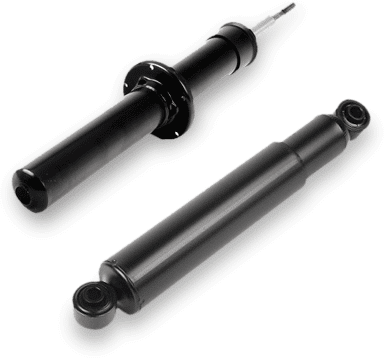
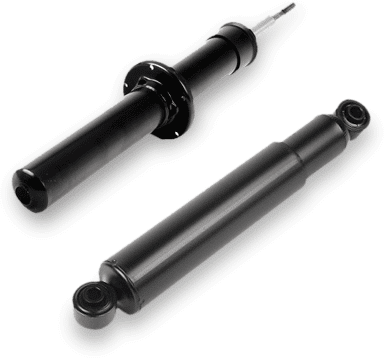
Products related to H-R-36-4866500-1-1:

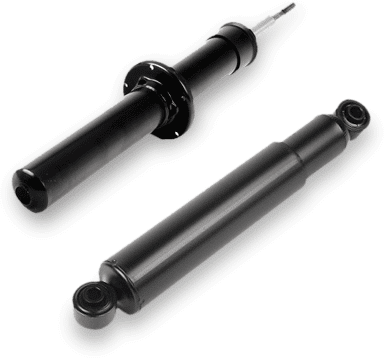
-
Why is 1 * 1 another way of writing 1 * 1 * 1?
1 * 1 is another way of writing 1 * 1 * 1 because when you multiply a number by 1, the value of the number remains unchanged. In other words, multiplying by 1 does not alter the original number. Therefore, when you multiply 1 by 1, the result is still 1, and when you multiply that result by 1 again, it remains 1. This is why 1 * 1 is equivalent to 1 * 1 * 1. **
-
Why 1&1?
1&1 is a popular choice for web hosting and domain registration because of its reliable services, user-friendly interface, and affordable pricing. They offer a wide range of hosting options to suit different needs, from shared hosting to dedicated servers. Additionally, 1&1 provides excellent customer support and a variety of tools to help users build and manage their websites effectively. Overall, 1&1 is a trusted and reputable company that provides quality services for individuals and businesses looking to establish an online presence. **
-
Why is lim (h -> 0) (2h + 1) ln(2)?
The limit lim (h -> 0) (2h + 1) ln(2) can be evaluated using the limit properties. As h approaches 0, the term 2h becomes negligible, and we are left with the limit of 1 ln(2), which equals ln(2) by the property of logarithms. Therefore, the limit lim (h -> 0) (2h + 1) ln(2) simplifies to ln(2). **
-
Why are 1, 11, and 1+1?
The numbers 1, 11, and 1+1 are related because they all represent different ways of expressing the quantity of one. The number 1 is the basic unit of one, while 11 is a multiple of 1, and 1+1 is the sum of two ones. Each of these expressions represents the concept of one in a different mathematical context, showing how the same quantity can be represented in various ways. **
How do you determine the kernel of a linear transformation from R^3 to R^1?
To determine the kernel of a linear transformation from R^3 to R^1, we first need to find the matrix representation of the linear transformation. This matrix will have 3 rows and 1 column. Next, we solve the system of equations represented by the matrix to find the values of x, y, and z that satisfy the equation Ax = 0, where A is the matrix representation of the linear transformation. The solutions to this system of equations will give us the vectors in R^3 that map to the zero vector in R^1, which form the kernel of the linear transformation. **
How do you determine the kernel of a linear mapping from R^3 to R^1?
To determine the kernel of a linear mapping from R^3 to R^1, we first need to find the null space of the linear mapping. This involves solving the system of equations represented by the linear mapping, setting the output to zero. The kernel of the linear mapping is then the set of all vectors in R^3 that get mapped to the zero vector in R^1. In other words, it is the set of all solutions to the system of equations that result in the output being zero. **
Top-Angebote
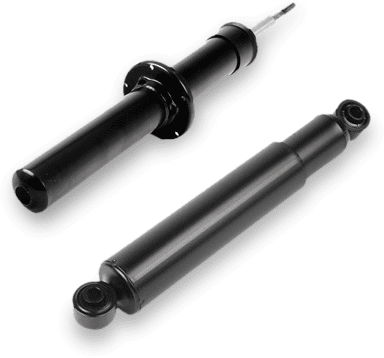
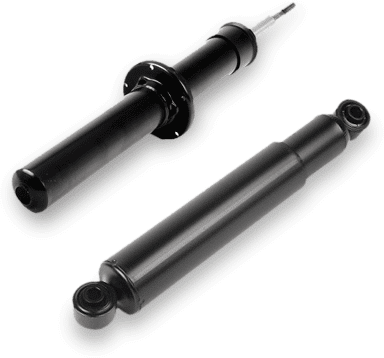
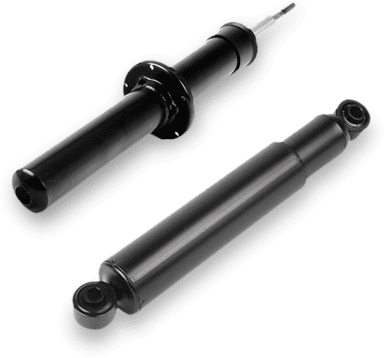
Products related to H-R-36-4866500-1-1:
-
Why does 1 kWh equal 36 MJ?
1 kWh is equal to 3.6 million joules (J). Since 1 kilowatt-hour (kWh) is a unit of energy commonly used in the electricity sector, it is equivalent to 3.6 million joules. The conversion factor between joules and megajoules (MJ) is 1 MJ = 1,000,000 J. Therefore, 1 kWh is equal to 3.6 MJ (3.6 million joules). **
-
Why does 1 kWh correspond to 36 MJ?
1 kWh corresponds to 36 MJ because 1 kilowatt-hour is equal to 3.6 million joules (1 kW = 1000 J/s, and there are 3600 seconds in an hour). Since 1 MJ is equal to 1 million joules, 1 kWh is equivalent to 3.6 MJ. This conversion factor allows for easy comparison and calculation between the two units of energy. **
-
Why is 1 * 1 another way of writing 1 * 1 * 1?
1 * 1 is another way of writing 1 * 1 * 1 because when you multiply a number by 1, the value of the number remains unchanged. In other words, multiplying by 1 does not alter the original number. Therefore, when you multiply 1 by 1, the result is still 1, and when you multiply that result by 1 again, it remains 1. This is why 1 * 1 is equivalent to 1 * 1 * 1. **
-
Why 1&1?
1&1 is a popular choice for web hosting and domain registration because of its reliable services, user-friendly interface, and affordable pricing. They offer a wide range of hosting options to suit different needs, from shared hosting to dedicated servers. Additionally, 1&1 provides excellent customer support and a variety of tools to help users build and manage their websites effectively. Overall, 1&1 is a trusted and reputable company that provides quality services for individuals and businesses looking to establish an online presence. **
Similar search terms for H-R-36-4866500-1-1
-
Why is lim (h -> 0) (2h + 1) ln(2)?
The limit lim (h -> 0) (2h + 1) ln(2) can be evaluated using the limit properties. As h approaches 0, the term 2h becomes negligible, and we are left with the limit of 1 ln(2), which equals ln(2) by the property of logarithms. Therefore, the limit lim (h -> 0) (2h + 1) ln(2) simplifies to ln(2). **
-
Why are 1, 11, and 1+1?
The numbers 1, 11, and 1+1 are related because they all represent different ways of expressing the quantity of one. The number 1 is the basic unit of one, while 11 is a multiple of 1, and 1+1 is the sum of two ones. Each of these expressions represents the concept of one in a different mathematical context, showing how the same quantity can be represented in various ways. **
-
How do you determine the kernel of a linear transformation from R^3 to R^1?
To determine the kernel of a linear transformation from R^3 to R^1, we first need to find the matrix representation of the linear transformation. This matrix will have 3 rows and 1 column. Next, we solve the system of equations represented by the matrix to find the values of x, y, and z that satisfy the equation Ax = 0, where A is the matrix representation of the linear transformation. The solutions to this system of equations will give us the vectors in R^3 that map to the zero vector in R^1, which form the kernel of the linear transformation. **
-
How do you determine the kernel of a linear mapping from R^3 to R^1?
To determine the kernel of a linear mapping from R^3 to R^1, we first need to find the null space of the linear mapping. This involves solving the system of equations represented by the linear mapping, setting the output to zero. The kernel of the linear mapping is then the set of all vectors in R^3 that get mapped to the zero vector in R^1. In other words, it is the set of all solutions to the system of equations that result in the output being zero. **
* All prices are inclusive of VAT and, if applicable, plus shipping costs. The offer information is based on the details provided by the respective shop and is updated through automated processes. Real-time updates do not occur, so deviations can occur in individual cases. ** Note: Parts of this content were created by AI.